What we can do.
And what we won't pretend.
We are not a sustainable factory. We are a factory that offers sustainable options. There is a difference, and pretending otherwise insults the buyers who actually care. Below is exactly what we can do, what certifications cover our materials, and where we still have work to do.
No greenwashing.
Just options.
European buyers can spot greenwashing. We don't try.
Activewear manufacturing in China has a real environmental footprint — synthetic fibres, energy-intensive dyeing, water use, transport. Pretending we've solved all of it would be dishonest. What we have done is build a set of sustainable options our clients can choose, and made the certifications that back them publicly available.
If your brand has a sustainability story, we can match it with verifiable inputs. If your brand doesn't, that's fine too — we make conventional product as well, and we won't lecture you about it.
Three rules we follow
- Every claim is documented. If we say a fabric is recycled, we send you the GRS certificate.
- We tell you what we can't do. No "fully sustainable factory" claims, no vague "eco-friendly" labels.
- Certifications are at the source, not marketing. The certificates are held by the mills and dye houses we use. We don't rebrand them as our own.
Fabrics with
verified inputs.
These are the recycled and certified fabric options we currently offer. Each comes with a higher price tier and may add 7–14 days to lead time depending on stock availability. We can send swatches and certificates on request.
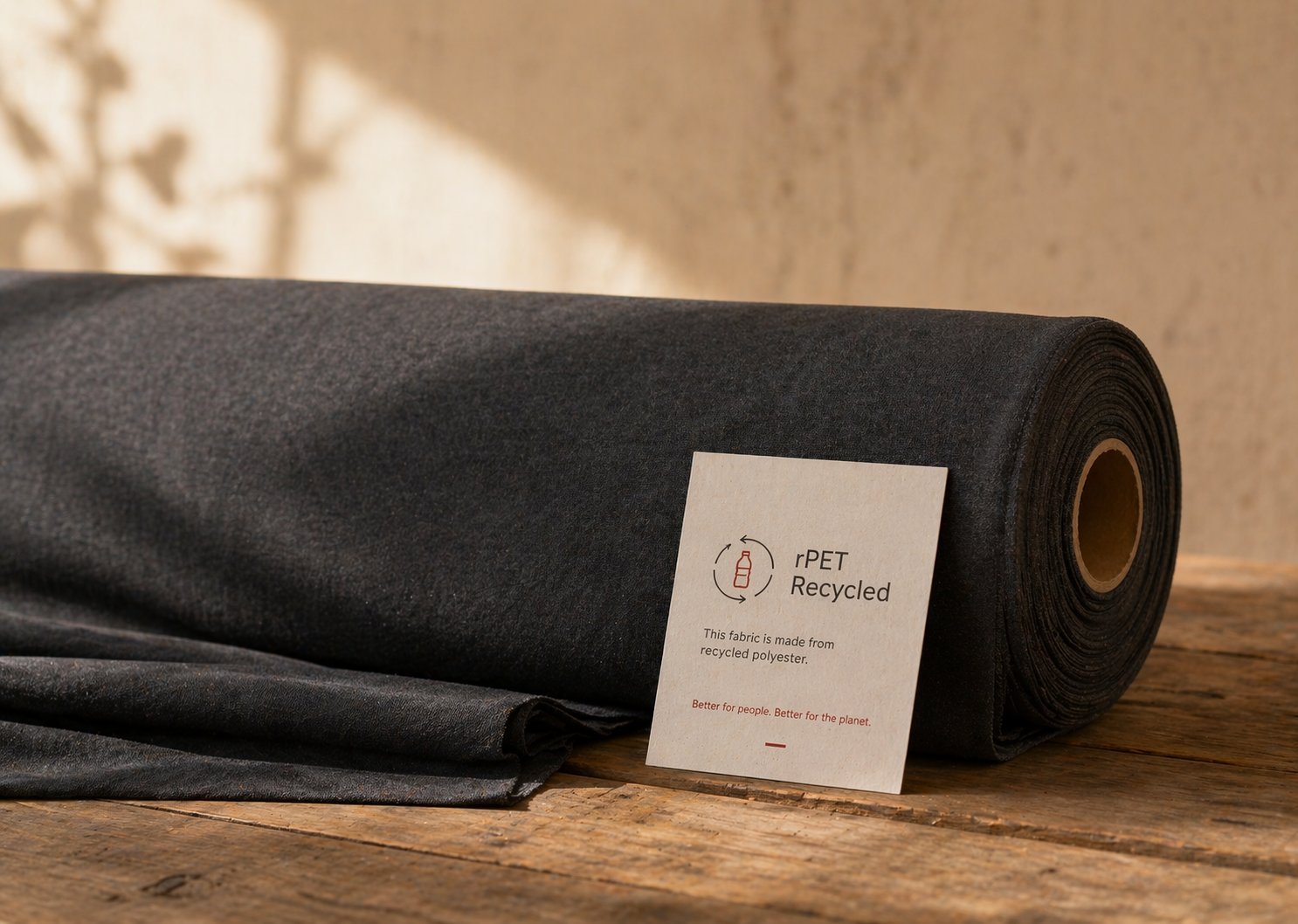
rPET (recycled PET bottles)
Polyester fibre made from post-consumer plastic bottles. GRS (Global Recycled Standard) certified at the mill level. Available in 75% rPET / 25% spandex blend at 220–280 GSM.
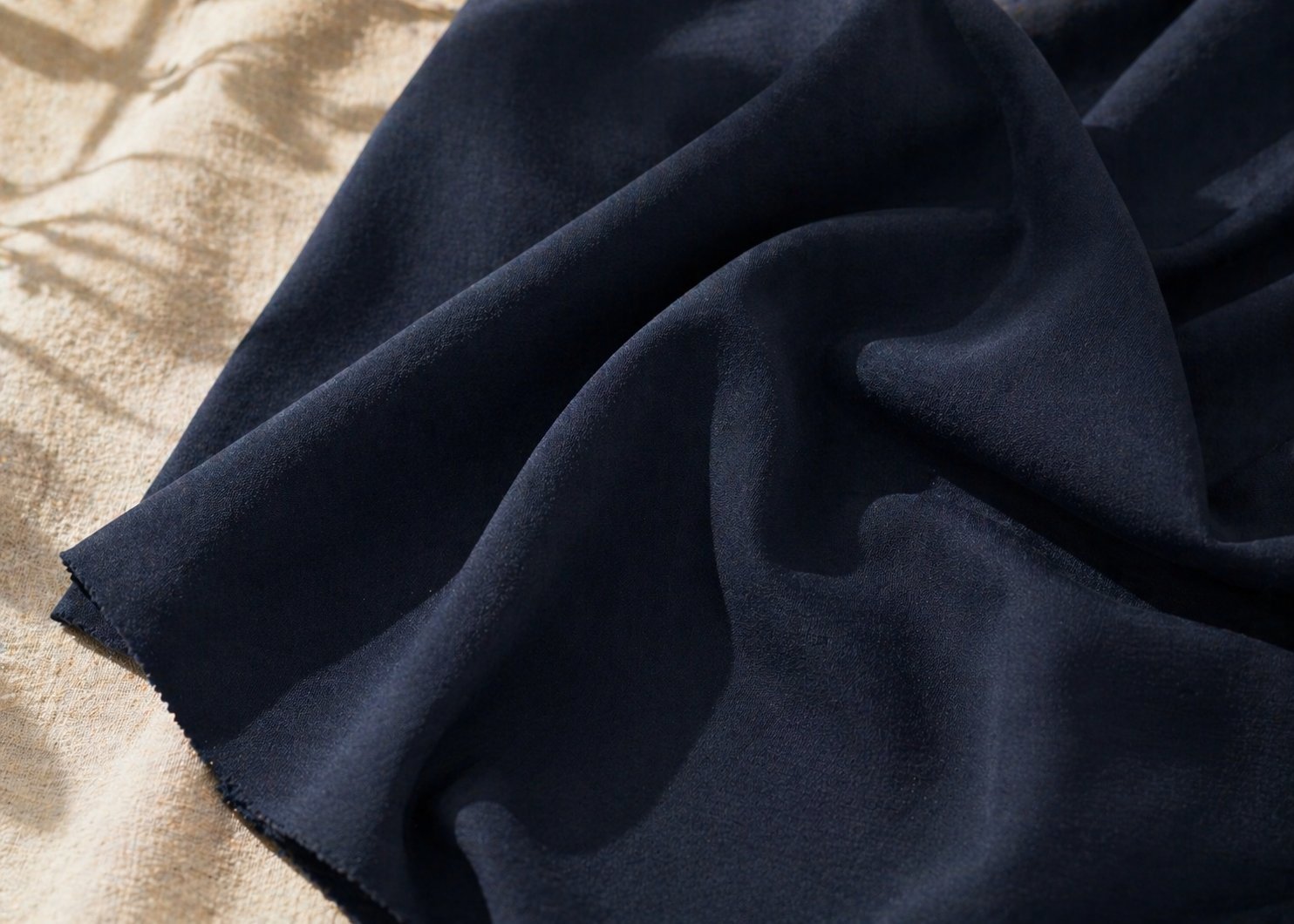
ECONYL® regenerated nylon
Regenerated nylon from ocean plastic, fishing nets and fabric scraps. Same performance as virgin nylon. Available in 78% ECONYL / 22% elastane blend, suitable for swimwear and seamless activewear.
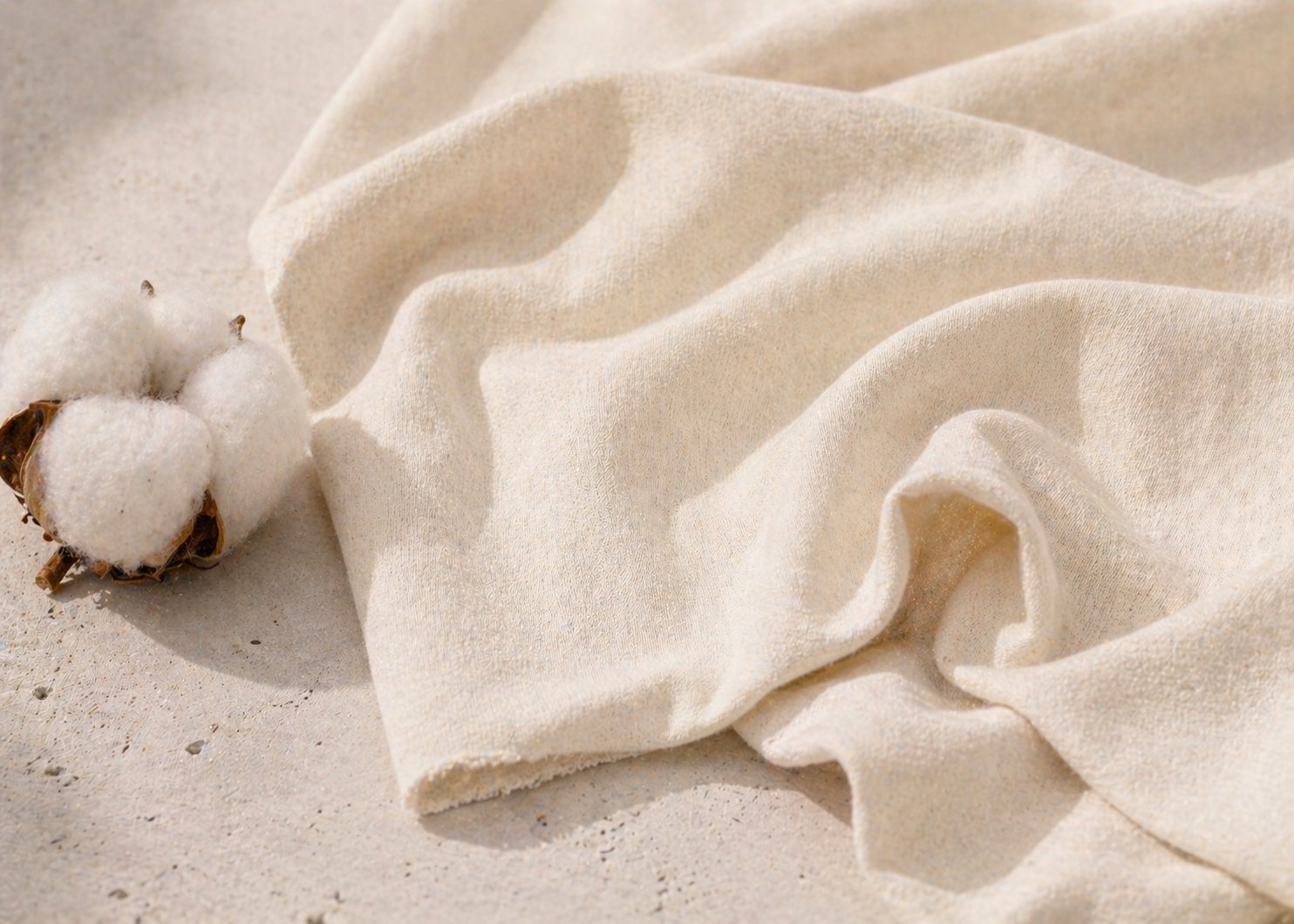
OEKO-TEX Standard 100 nylon-spandex
Our standard nylon-spandex base fabric is OEKO-TEX Standard 100 certified at the mill level. Tested for harmful substances. This is the most commonly requested baseline by EU and Scandinavian buyers.
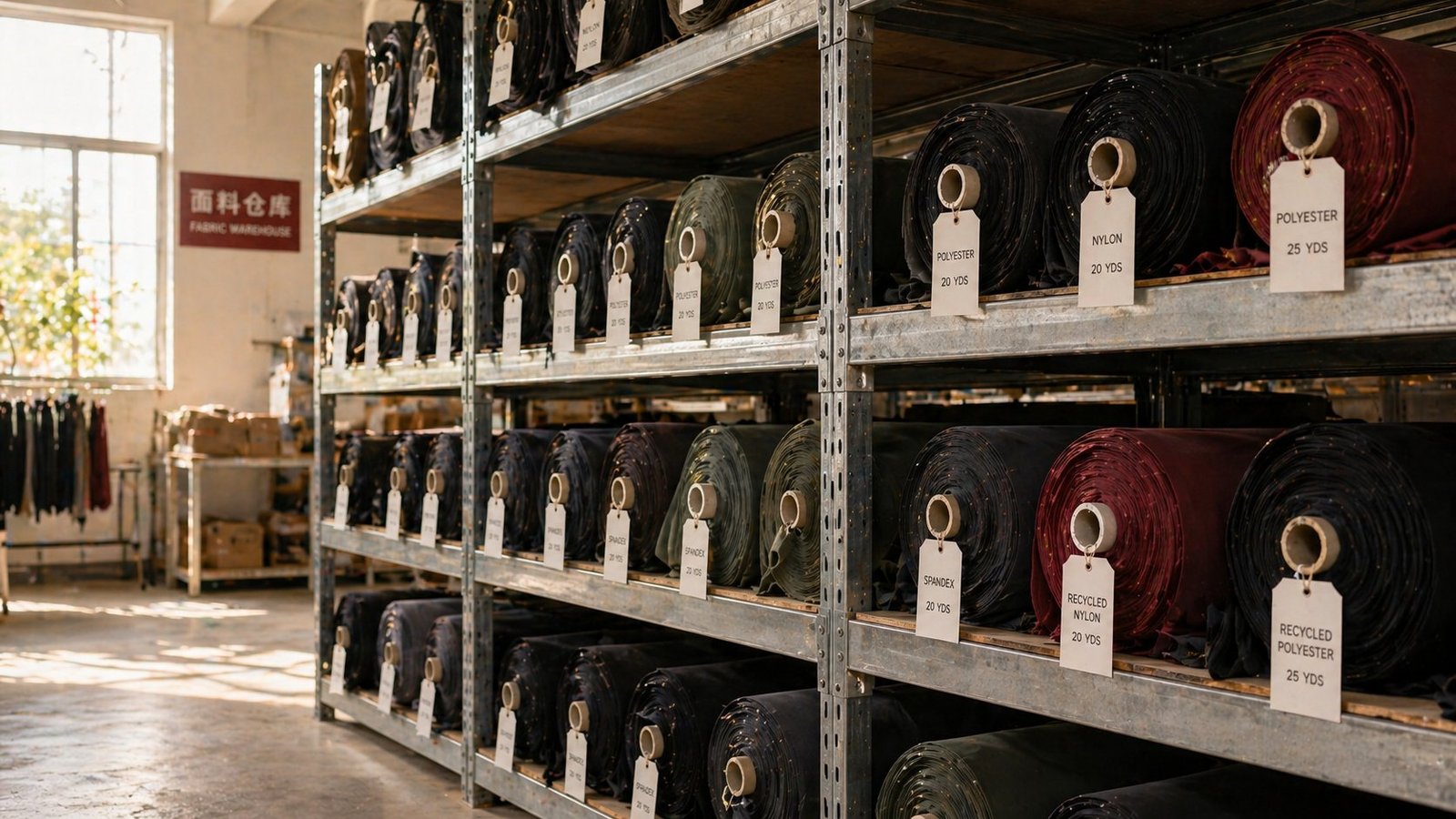
Deadstock & surplus fabric [TODO: confirm with mill]
For low-volume capsule collections, we can sometimes source deadstock (overruns from larger brands) at lower MOQs and lower prices. Availability is unpredictable — we maintain a deadstock list and can match to your project.
Real certificates,
not marketing.
These certifications are held at the source — by the fabric mills, dye houses and production lines where the materials are actually made. We can request and forward the relevant PDFs within 24 hours during your supplier qualification process. If you need a certification we don't currently have access to, tell us — we'll source it.
logo
OEKO-TEX Standard 100
Fabric tested against a list of harmful substances. The most commonly requested certification globally.
✓ Available on standard nylon-spandex fabrics
logo
Global Recycled Standard
Verifies recycled content, social and environmental practices, and chemical restrictions through the supply chain.
✓ Available on rPET and ECONYL fabrics
logo
amfori BSCI Social Compliance
Audited against 11 principles covering labor rights, working hours, fair compensation and ethical business behavior.
✓ Held by the factories we use — audit reports on request
logo
EU REACH Compliance
Chemical regulation covering Substances of Very High Concern (SVHC) — required for all textile shipments to the EU.
✓ Compliant on all EU shipments
logo
US CPSIA Compliance
Lead and phthalate limits for shipments to the United States, including youth and children's sizes.
✓ Compliant on all US shipments
logo
Sedex / SMETA [TODO: confirm]
Ethical trade audit covering labor standards, health and safety, environment and business ethics.
⚠ Available on request — please check before relying on this for RFP
Where we still
have work to do.
Being honest about gaps is more useful than overclaiming. Here's what we don't have figured out yet — and how we're approaching it.
CO₂ footprint per garment
We don't currently calculate emissions per unit. Several brands have requested this for their own scope-3 reporting. We're researching tools (Higg MSI / Carbonfact) and expect to offer baseline numbers by mid-2026.
Water and dye-house data
Our dye houses are ZDHC-aware but we don't yet publish water use or wastewater data per order. We can request specific dye-house reports when buyers need them.
Biodegradable / compostable packaging
Our default is conventional polybag and corrugated carton. Biodegradable polybags and FSC-certified outer cartons are available on request at a small price premium.
Take-back / circularity
We don't currently offer a take-back program for end-of-life garments. If your brand needs a circularity story, we can introduce you to recyclers — but we won't pretend we run a take-back program ourselves.